Buying Over Renting. This article points out the two main reasons that buying is a wiser decision than renting. First of all, home prices go up, historically. That's good, if you're the owner. And, rents tend to go up, also. That's bad, if you're the tenant. Those two factors, alone, make buying superior to renting. But, it goes a lot further. How about "pride of ownership". Being able to make changes and updates over the years, making it unique to you. Also, the tax benefits. Being able to deduct mortgage interest and real estate taxes makes a huge difference in annual expense. Bottom line. It's always better to own than to rent. Even in today's high home prices and high mortgage interest rates, it's wise to buy what you can afford. If rates go down, simply refinance to the lower rate. If they stay the same or go up, you'll be glad you didn't wait.
Thinking about buying a home? While today’s mortgage rates might seem a bit intimidating, here are two solid reasons why, if you’re ready and able, it could still be a smart move to get your own place.
There’s been some confusion over the past year or so about which way home prices are headed. Make no mistake, nationally they’re still going up. In fact, over the long-term, home prices almost always go up (see graph below):
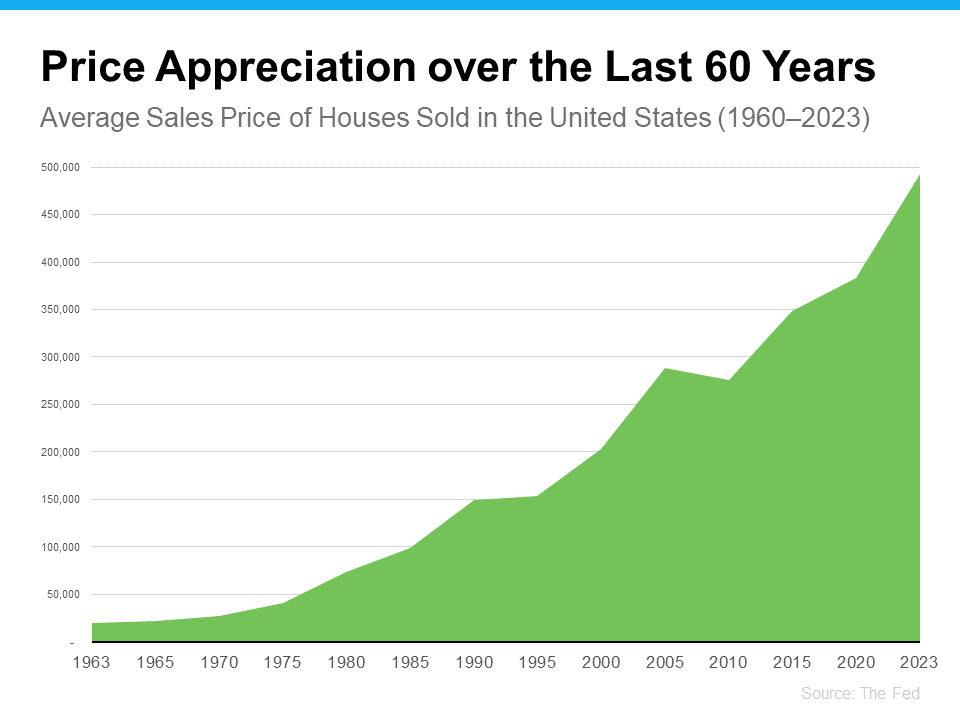
Using data from the Federal Reserve (the Fed), you can see the overall trend is home prices have climbed steadily for the past 60 years. There was an exception during the 2008 housing crash when prices didn't follow the normal pattern, but generally, home values kept rising.
This is a big reason why buying a home can be better than renting. As prices go up and you pay down your mortgage, you build equity. Over time, this growing equity can really increase your net worth. The Urban Institute says:
“Homeownership is critical for wealth building and financial stability.”
Here’s another reason you may want to think about buying a home instead of renting – rent just keeps going up over the years. Sure, it might be cheaper to rent right now in some areas, but every time you renew your lease or sign a new one, you’re likely to feel the squeeze of your rent getting higher. According to data from iProperty Management, rent has been going up pretty consistently for the last 60 years, too (see graph below):
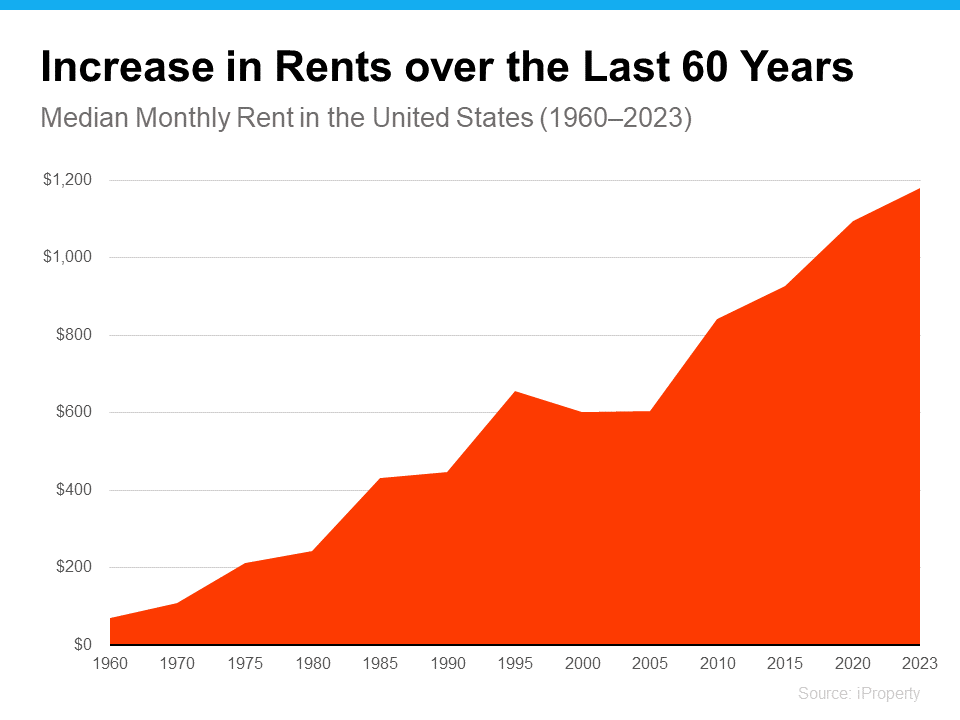
So how do you escape the cycle of rising rents? Buying a home with a fixed-rate mortgage helps you stabilize your housing costs and say goodbye to those annoying rent increases. That kind of stability is a big deal.
Your housing payments are like an investment, and you've got a decision to make. Do you want to invest in yourself or keep paying your landlord?
When you own your home, you're investing in your own future. And even when renting is cheaper, that money you pay every month is gone for good.
As Dr. Jessica Lautz, Deputy Chief Economist and VP of Research at the National Association of Realtors (NAR), says:
“If a homebuyer is financially stable, able to manage monthly mortgage costs and can handle the associated household maintenance expenses, then it makes sense to purchase a home.”
If you're tired of your rent going up and want to explore the many benefits of homeownership, let’s talk to explore your options.

If you’ve been keeping up with the news lately, you’ve probably come across some articles saying the number of foreclosures in today’s housing market is going up. And that may leave you feeling a bit worried about what’s ahead, especially if you owned a home during the housing crash in 2008.
The reality is, while increasing, the data shows a foreclosure crisis is not where the market is headed.
Here’s the latest information stacked against the historical data to put your mind at ease.
The increase the media is calling attention to is a little bit misleading. That’s because it’s comparing the most recent numbers to a time when foreclosures were at historic lows. And that lopsided comparison is making it sound like a much bigger deal than it actually is.
Back in 2020 and 2021, there was a moratorium and forbearance program that helped millions of homeowners avoid foreclosure during challenging times. That’s why numbers for just a few years ago were so low.
Now that the moratorium has come to an end, foreclosures are resuming and that means numbers are rising. But it’s an expected increase, not a surprise, and not a cause for alarm. Just because foreclosure filings are up doesn’t mean the housing market is in trouble.
To prove that to you, let’s expand the comparison out a bit more. Specifically, we’ll go all the way back to the housing crash in 2008 – since that’s what people worry may happen again.
The graph below uses research from ATTOM, a property data provider, to show foreclosure activity has been consistently lower since the crash in 2008:
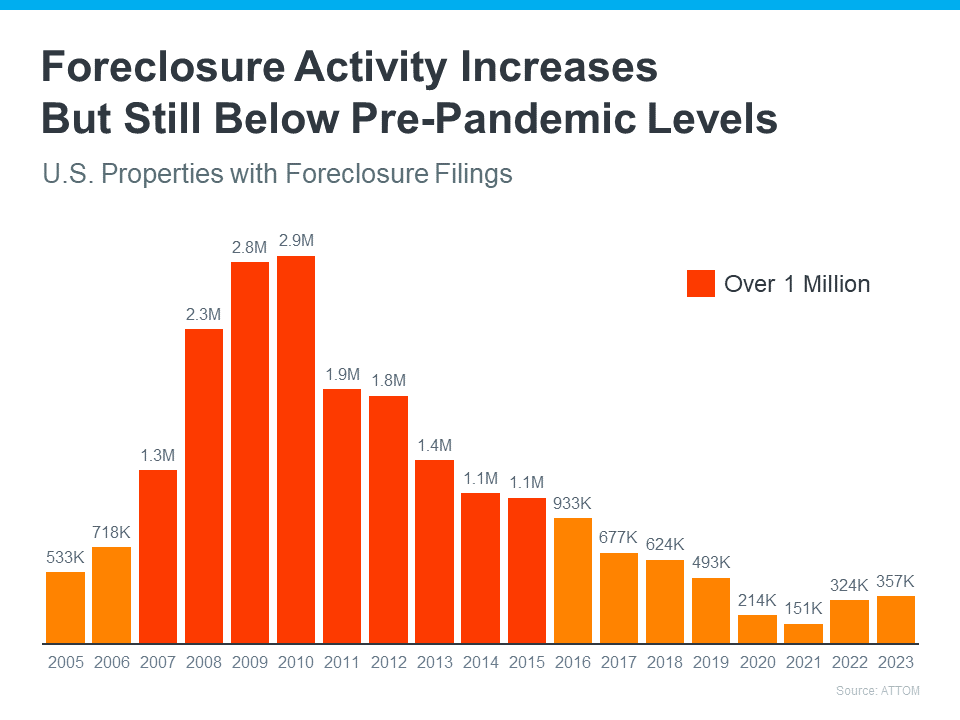
What the data shows is that things now aren’t anything like they were surrounding the housing crash. The bars in red are when there were over 1 million foreclosure filings a year. In 2023, there were roughly 357,000. That’s a big difference.
A recent article from Bankrate explains one of the reasons things aren’t like they were back then:
“In the years after the housing crash, millions of foreclosures flooded the housing market, depressing prices. That’s not the case now. Most homeowners have a comfortable equity cushion in their homes.”
Basically, foreclosure activity is nothing like it was during the crash. That’s because most homeowners today have enough equity to keep them from going into foreclosure. And that’s a really good thing for homeowners and for the market.
The reality is, the data shows a foreclosure crisis is not where the market is today, or where it’s headed.
Right now, putting the data into context is more important than ever. While the housing market is experiencing an expected rise in foreclosures, it’s nowhere near the crisis levels seen when the housing bubble burst, and that won’t lead to a crash in home prices.
Every day we do a thorough search of homes for sale here in Parker, Colorado. Parker is a very dynamic market and it's critical to search and review all of the listings every day. If you would like to see all of the listings, simply click on the link below.
This article strongly implies that it is getting more affordable to buy a home. It suggests that mortgage rates are coming down, home prices are increasing at a reduced rate and wages are increasing at a higher rate. All of this might be true, but it certainly does not make buying a home more affordable. Waiting, in my opinion, will only cost you. For example, if rates go down, home prices will spike. What then. So, take the risk out. Buy what you can today, with today's interest rates. If rates do come down in the future, you can refinance to the lower rate. And, you'll enjoy the jump in your home's value. Short of a real recession (which is certainly possible), waiting to purchase real estate is always a mistake. Don't be one of those people who say, "I wish we had bought a home when we could, rather than waiting until now".

Over the past year or so, a lot of people have been talking about how tough it is to buy a home. And while there’s no arguing affordability is still tight, there are signs it’s starting to get a bit better and may improve even more throughout the year. Elijah de la Campa, Senior Economist at Redfin, says:
“We’re slowly climbing our way out of an affordability hole, but we have a long way to go. Rates have come down from their peak and are expected to fall again by the end of the year, which should make homebuying a little more affordable and incentivize buyers to come off the sidelines.”
Here’s a look at the latest data for the three biggest factors that affect home affordability: mortgage rates, home prices, and wages.
Mortgage rates have been volatile this year – bouncing around in the upper 6% to low 7% range. That’s still quite a bit higher than where they were a couple of years ago. But there is a sliver of good news.
Despite the recent volatility, rates are still lower than they were last fall when they reached nearly 8%. On top of that, most experts still think they’ll come down some over the course of the year. A recent article from Bright MLS explains:
“Expect rates to come down in the second half of 2024 but remain above 6% this year. Even a modest drop in rates will bring both more buyers and more sellers into the market.”
Any drop in rates can make a difference for you. When rates go down, you can afford the home you really want more easily because your monthly payment would be lower.
The second big factor to think about is home prices. Most experts project they'll keep going up this year, but at a more normal pace. That’s because there are more homes on the market this year, but still not enough for everyone who wants to buy one. The graph below shows the latest 2024 home price forecasts from seven different organizations:
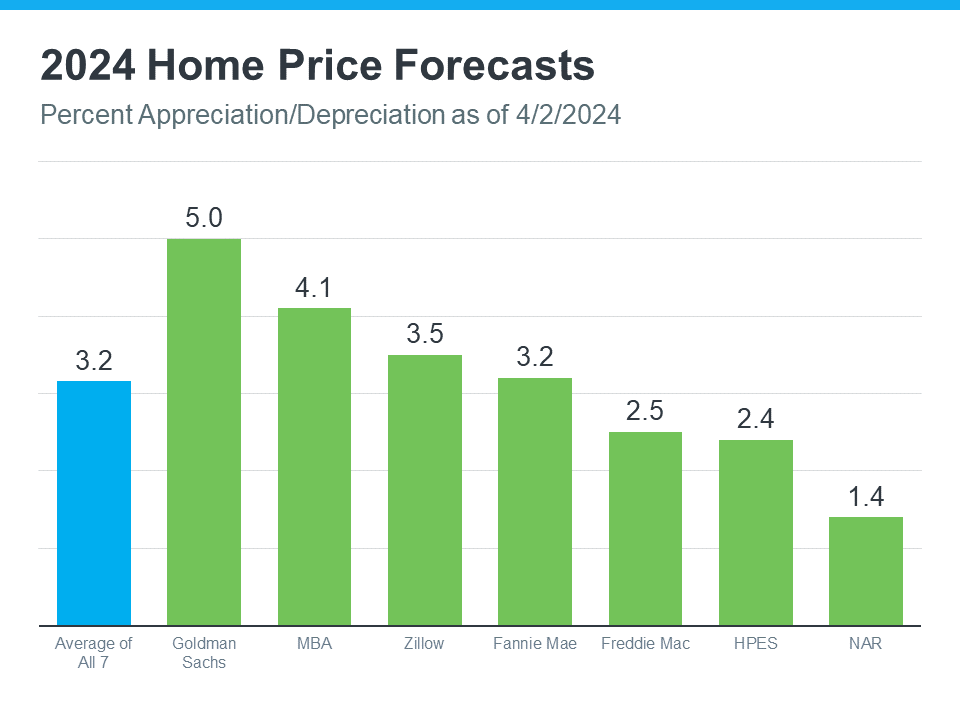
These forecasts are actually good news for you because it means the prices aren't likely to shoot up sky high like they did during the pandemic. That doesn’t mean they’re going to fall – they'll just rise at a slower pace.
One factor helping affordability right now is the fact that wages are rising. The graph below uses data from the Federal Reserve to show how wages have been growing over time:
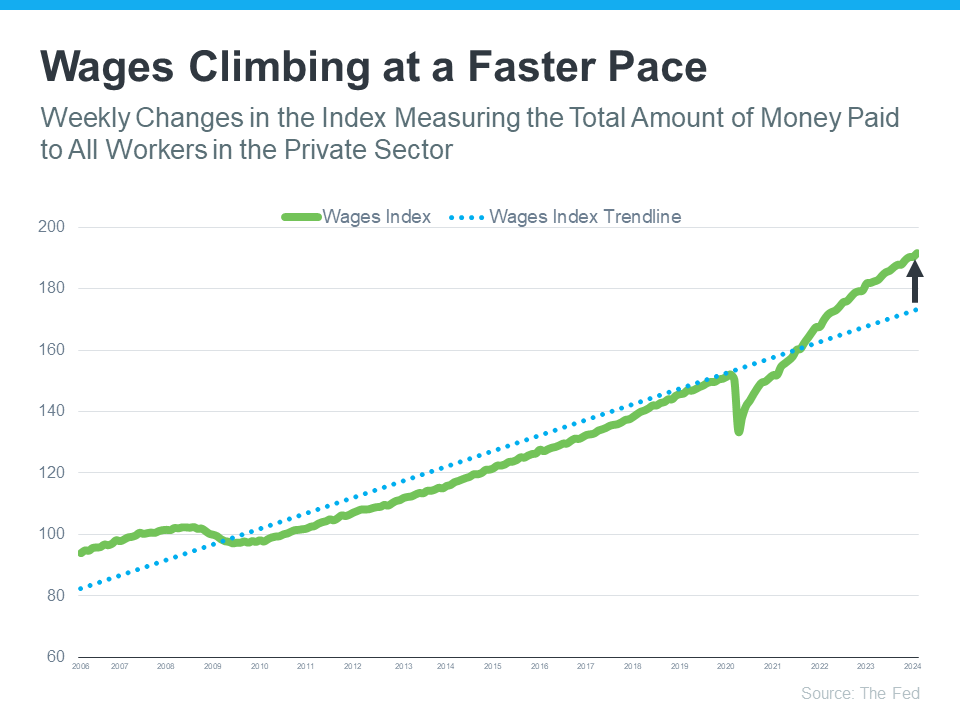
Check out the blue dotted line. That shows how wages typically rise. If you look at the right side of the graph, you'll see wages are climbing even faster than normal right now.
Here’s how this helps you. If your income has increased, it's easier to afford a home because you don't have to spend as big of a percentage of your paycheck on your monthly mortgage payment.
If you stack these factors up, you’ll see mortgage rates are still projected to come down a bit later this year, home prices are going up at a more moderate pace, and wages are growing quicker than normal. Those trends are a good sign for your ability to afford a home.
This article asks the question, " is it better to rent than buy a home right now". The answer, of course, is no. It points out that the increase in home equity over a 5 year period far outweighs the monthly savings from renting. I would also ad the tax advantages of buying a home. Without going into the math, I feel comfortable in saying that the ability to deduct mortgage interest and real estate taxes on your income tax return more than offsets the difference between a rent payment and a mortgage payment. So, it's the equity increase and income tax savings that makes buying superior to renting. Not to mention, the "pride of ownership" factor. And, guess what. There's no landlord to tell you how to live and when to move out.
You may have seen reports in the news recently saying it’s more affordable to rent right now than it is to buy a home. And while that may be true in some markets if you just look at typical monthly payments, there’s one thing that the numbers aren’t factoring in: and that’s home equity. Here’s a look at how big of an impact equity can have and why it’s worth considering as you make your decision.
The graph below uses national data on the median rental payment from Realtor.com and median mortgage payment from the National Association of Realtors (NAR) to compare the two options. As the graph shows, especially if you’re not looking for a lot of space, it can be more affordable on a monthly basis to rent:
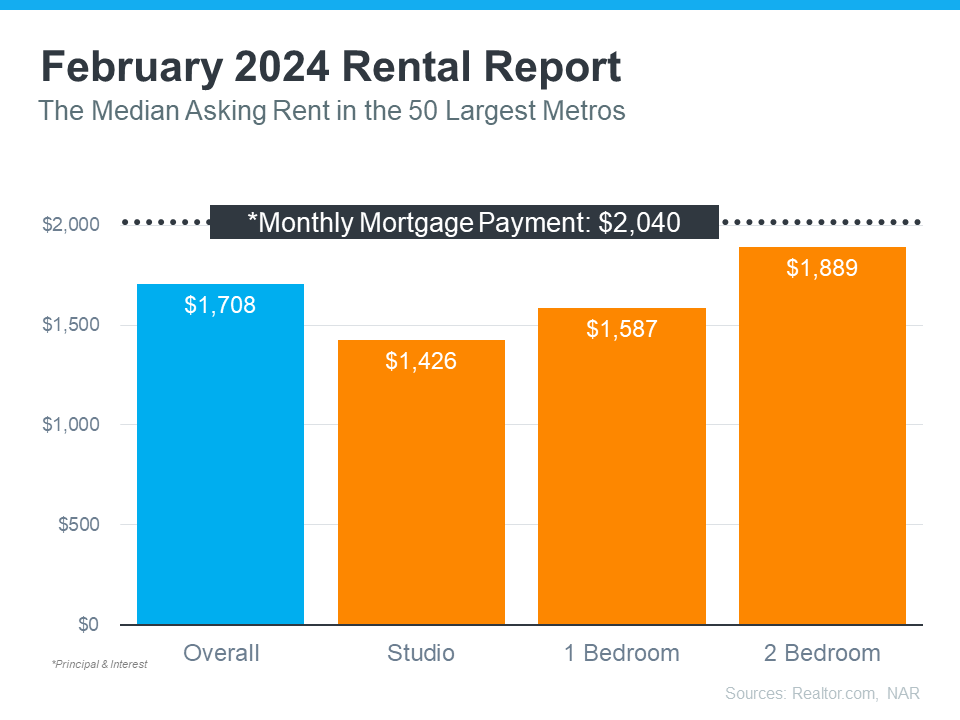
But if you’re looking for something with 2 bedrooms, the gap between the median rent and the median mortgage payment starts to shrink to a difference that may be more doable. The median monthly mortgage payment is $2,040. The median monthly rent for 2 bedrooms is $1,889. That’s a difference of about $151 a month. But here’s what happens when you factor in equity too.
If you rent, your monthly rental payments only go toward covering your housing costs and your landlord’s expenses. So other than saving a bit more per month and maybe getting your rental deposit back when you move, the money you spent on housing each month is gone – forever.
When you buy, your monthly mortgage payment pays for your shelter, but it also acts as an investment. That investment grows in the form of equity as you make your mortgage payment each month and chip away at what you owe on your home loan. Your equity gets an extra boost as home values climb – which they typically do.
To give you a clearer idea of how equity can really stack up fast, here’s some data for you. Each quarter, Fannie Mae and Pulsenomics publish the results of the Home Price Expectations Survey (HPES). It asks more than 100 economists, real estate professionals, and investment and market strategists what they think will happen with home prices. In the latest release, those experts say home prices are going to keep going up over the next five years.
Here's an example of how equity builds based on the projections from the HPES (see graph below):
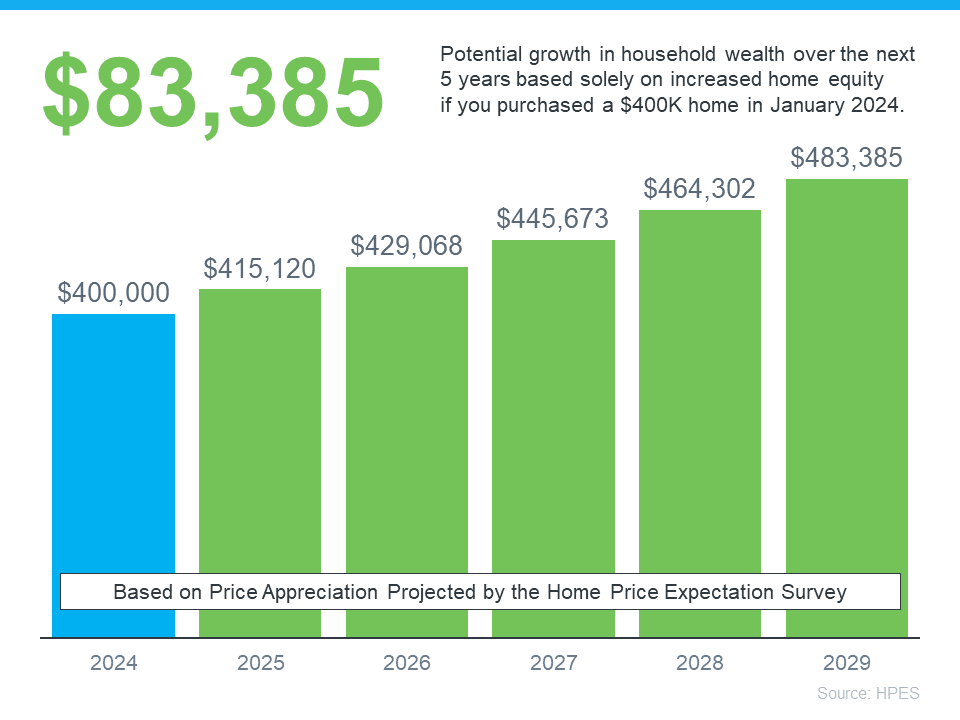
Imagine you purchased a home for $400,000 at the start of this year. Chances are, since you bought, you plan to stay put for a while. Based on the HPES projections, if you live there for 5 years, you could end up gaining over $83,000 in household wealth as your home grows in value.
Here’s how that stacks up compared to renting, using the overall median rent from above:
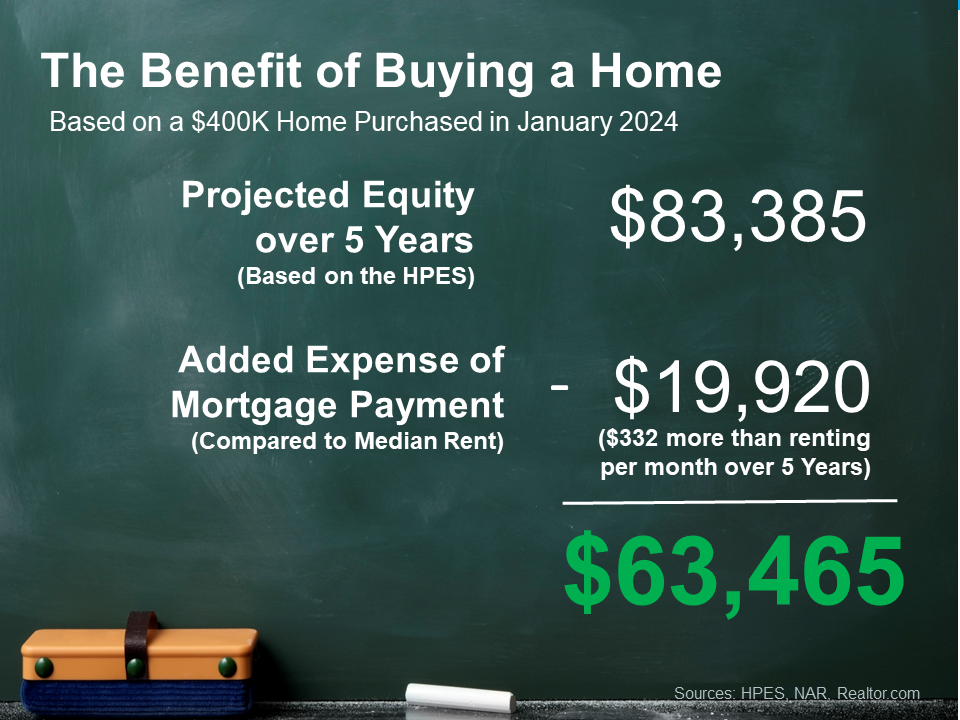
While you may save a bit on your monthly payments if you rent right now, you’ll also miss out on gaining equity.
So, what’s the big takeaway? Whether it makes more sense to rent or buy is going to vary based on your personal finances. It’s not a good idea to buy if the numbers truly don’t work for you. But, if you’re ready and able, adding equity as the final puzzle piece may be enough to help you realize buying is a better move in the long run.
When it comes down to it, buying a home gives you a benefit renting just can’t provide – and that’s the chance to gain equity. If you want to take advantage of long-term home price appreciation, let’s go over your options.
Should I wait for mortgage rates to come down before I move? That's the title of the attached article. In my opinion, the answer is an absolute "NO". Amid the high mortgage rates that we've experienced over the last few years, home prices have remained relatively stable. And, there is no reason to expect them to go down. Actually, they are likely to go up, perhaps spike, when interest rates fall. So, waiting until rates fall will likely result in paying far higher home prices.
So, what's the solution. It's simple. Purchase what you can, today. If mortgage rates fall in the future (and the value of your home increases), simply refinance to the lower rate. It's a "win-win". If rates don't fall, you'll be glad you bought and stopped the bleeding.
I realize that home prices and mortgage rates have completely priced out many in the market. For those, it's going to take different strategies to buy a home. We have some ideas to help. Let's talk. Call me at 720.220.5058 or Cheryl at 303.981.7339.

If you’ve got a move on your mind, you may be wondering whether you should wait to sell until mortgage rates come down before you spring into action. Here’s some information that could help answer that question for you.
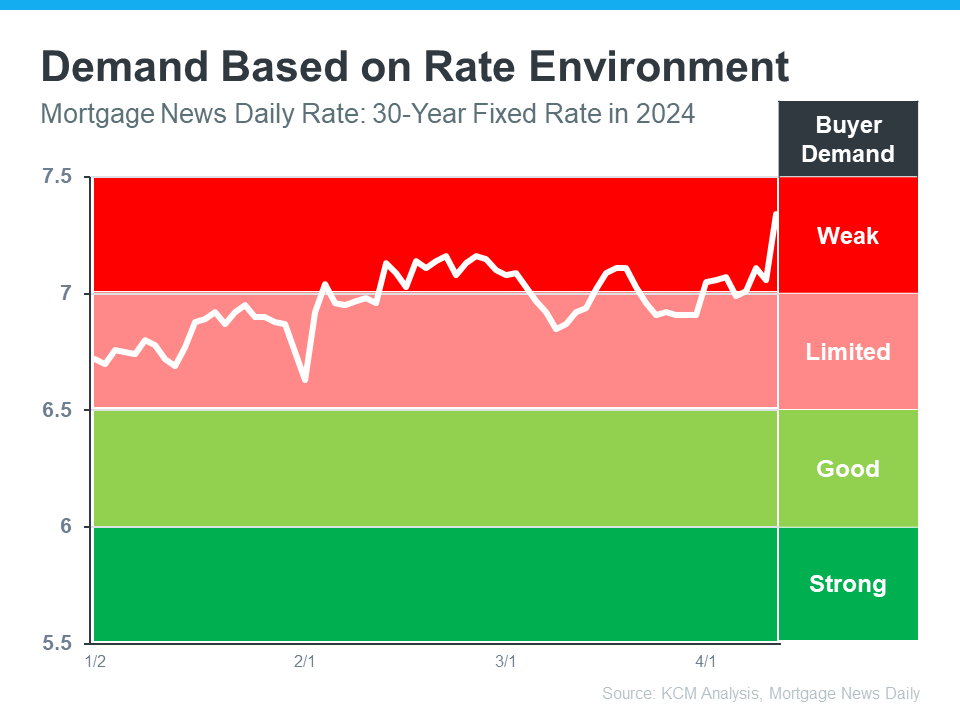
In the housing market, there’s a longstanding relationship between mortgage rates and buyer demand. Typically, the higher rates are, you’ll see lower buyer demand. That’s because some people who want to move will be hesitant to take on a higher mortgage rate for their next home. So, they decide to wait it out and put their plans on hold.
But when rates start to come down, things change. It goes from limited or weak demand to good or strong demand. That’s because a big portion of the buyers who sat on the sidelines when rates were higher are going to jump back in and make their moves happen. The graph below helps give you a visual of how this relationship works and where we are today:
As Lisa Sturtevant, Chief Economist for Bright MLS, explains:
“The higher rates we’re seeing now [are likely] going to lead more prospective buyers to sit out the market and wait for rates to come down.”
If you’re asking yourself: what does this mean for my move? Here’s the golden nugget. According to experts, mortgage rates are still projected to come down this year, just a bit later than they originally thought.
When rates come down, more people are going to get back into the market. And that means you’ll have a lot more competition from other buyers when you go to purchase your next home. That may make your move more stressful if you wait because greater demand could lead to an increase in multiple offer scenarios and prices rising faster.
But if you’re ready and able to sell now, it may be worth it to get ahead of that. You have the chance to move before the competition increases.
If you’re thinking about whether you should wait for rates to come down before you move, don’t forget to factor in buyer demand. Once rates decline, competition will go up even more. If you want to get ahead of that and sell now, let’s chat.
